

Meet DJ Luvbug.
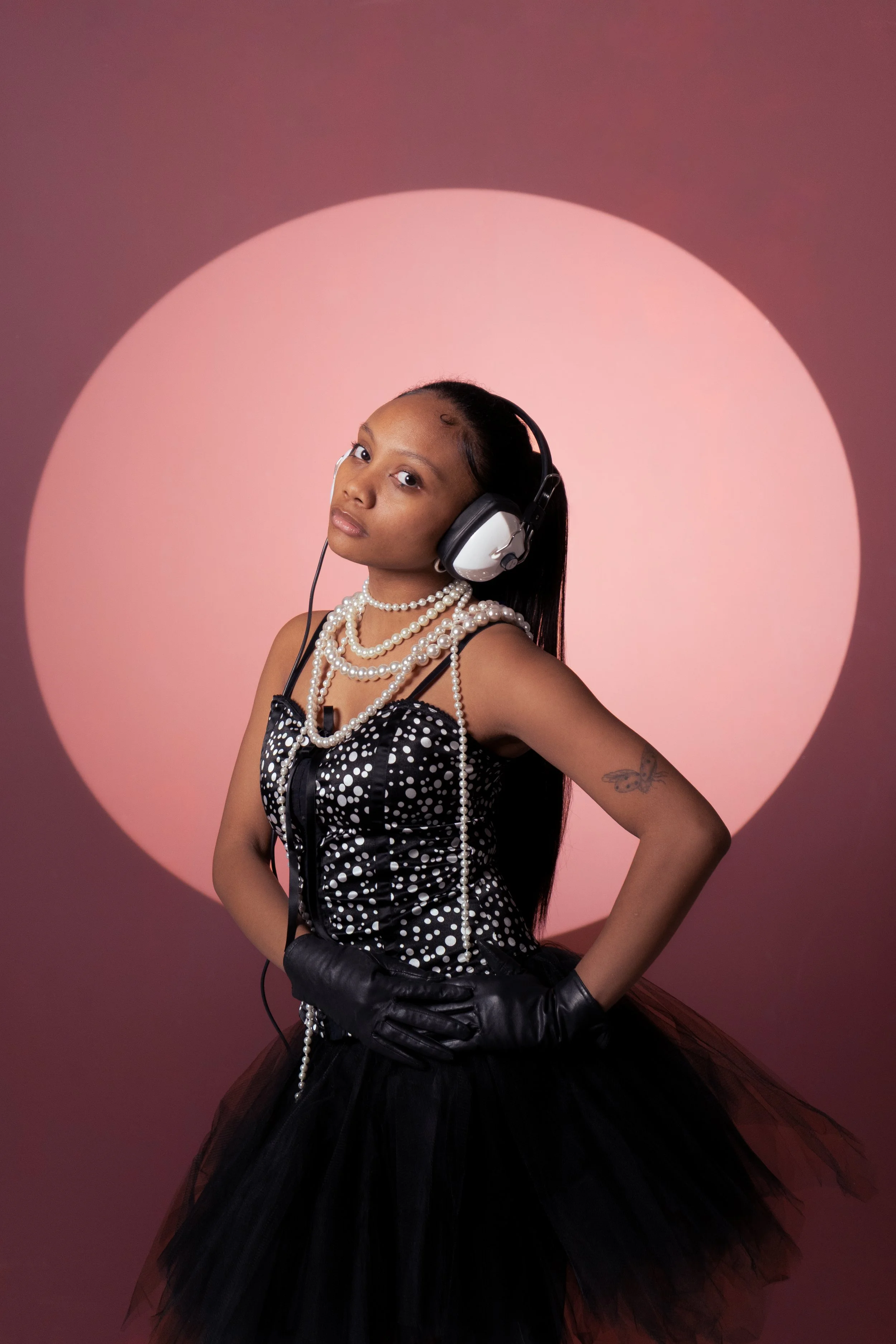
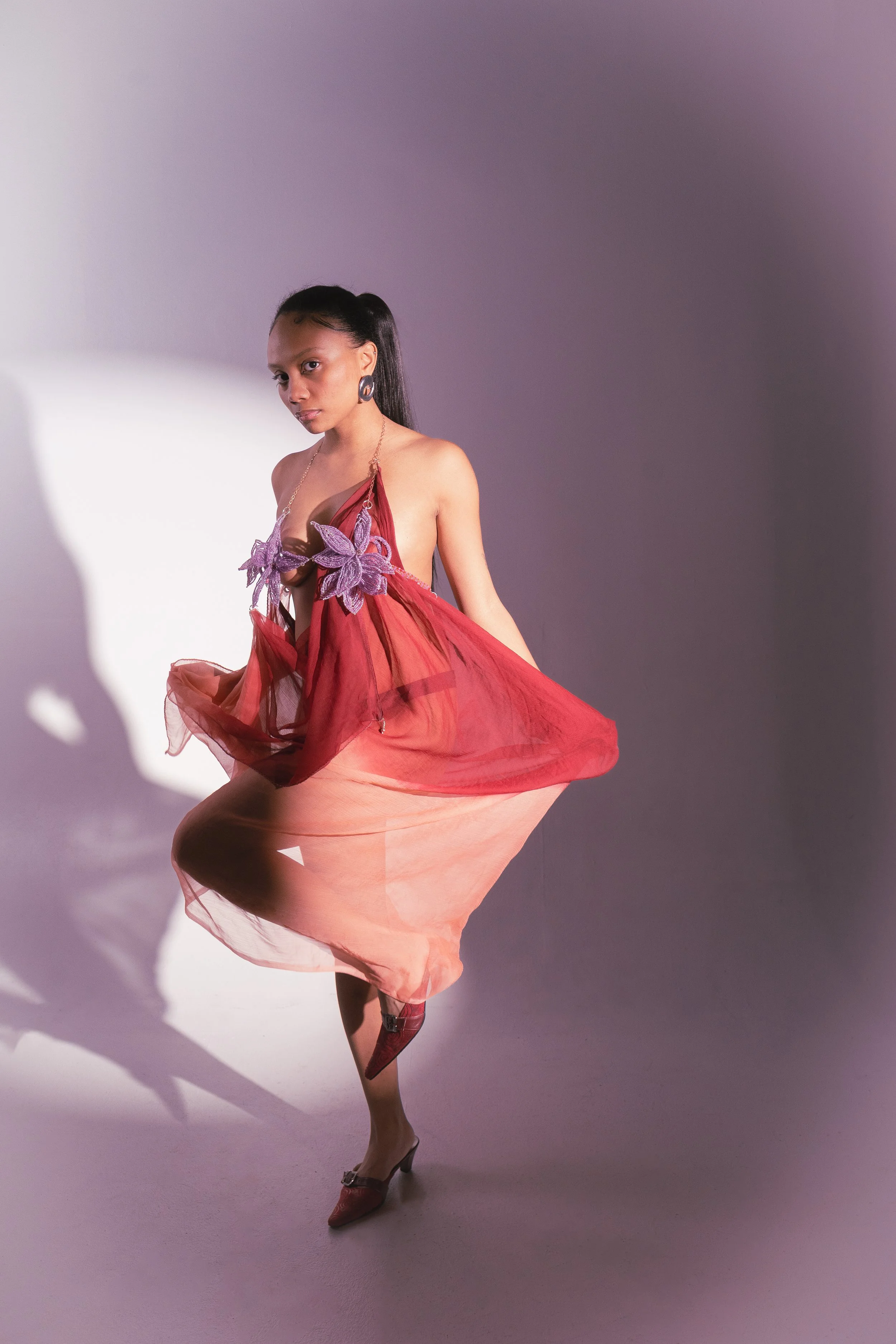
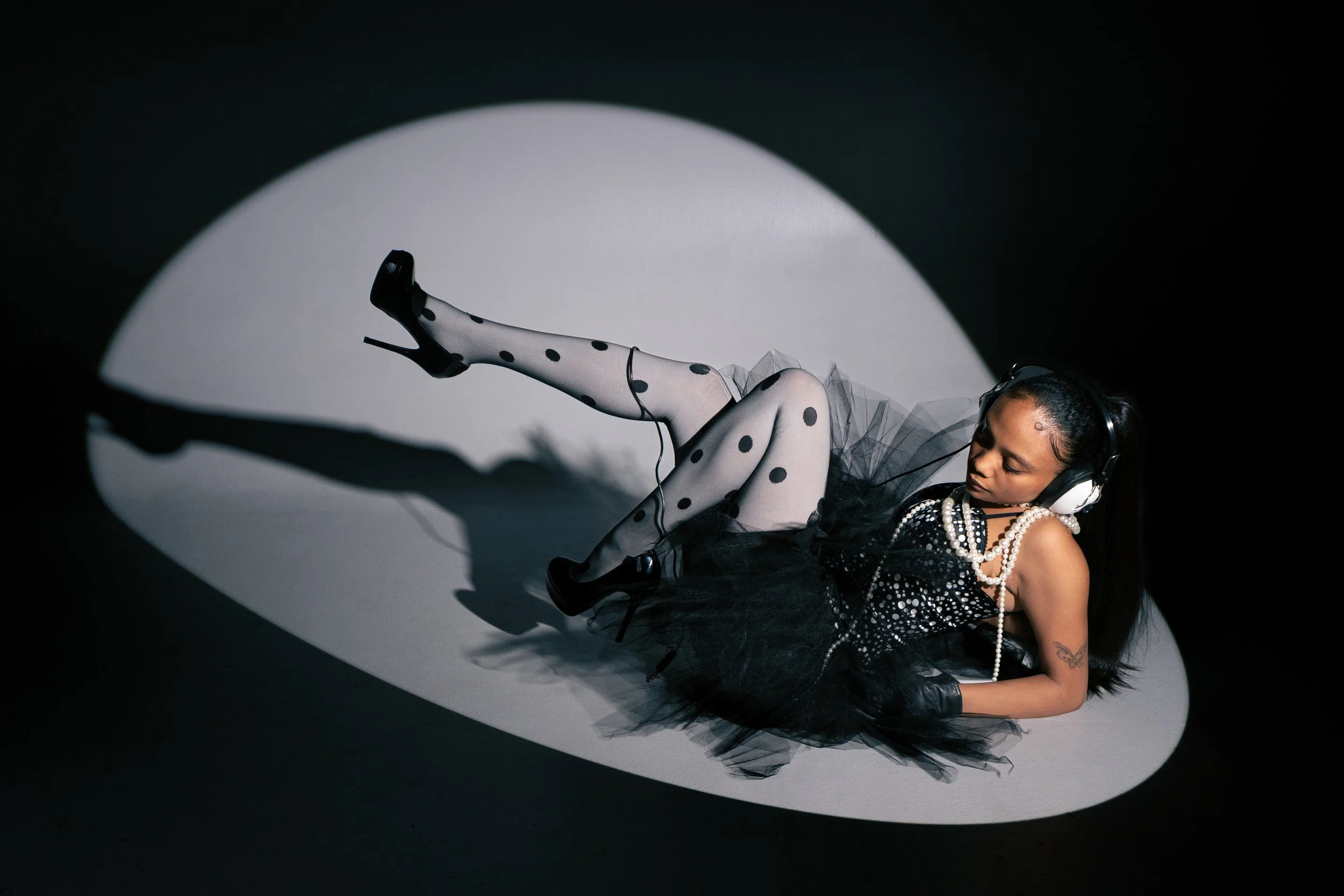
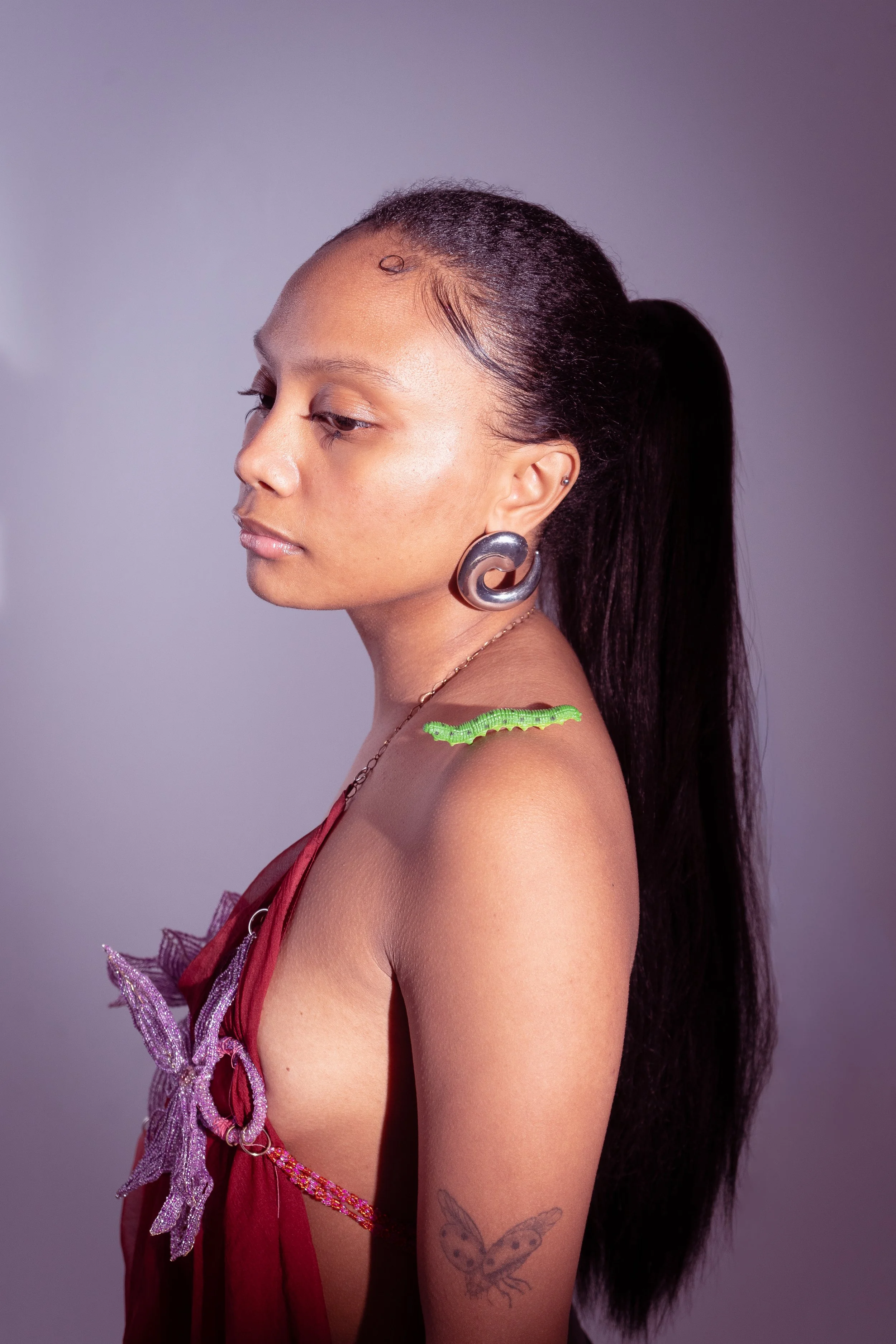
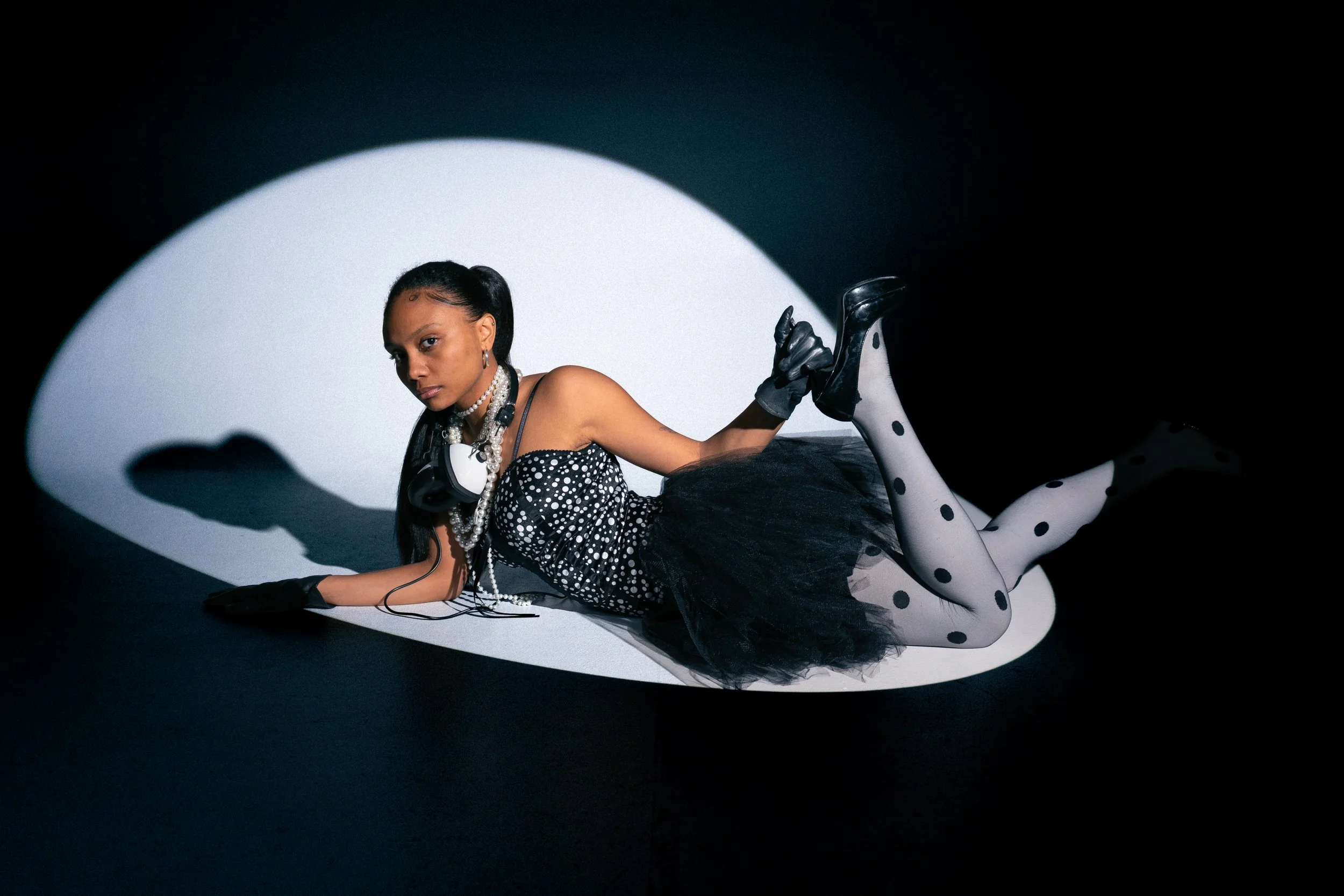
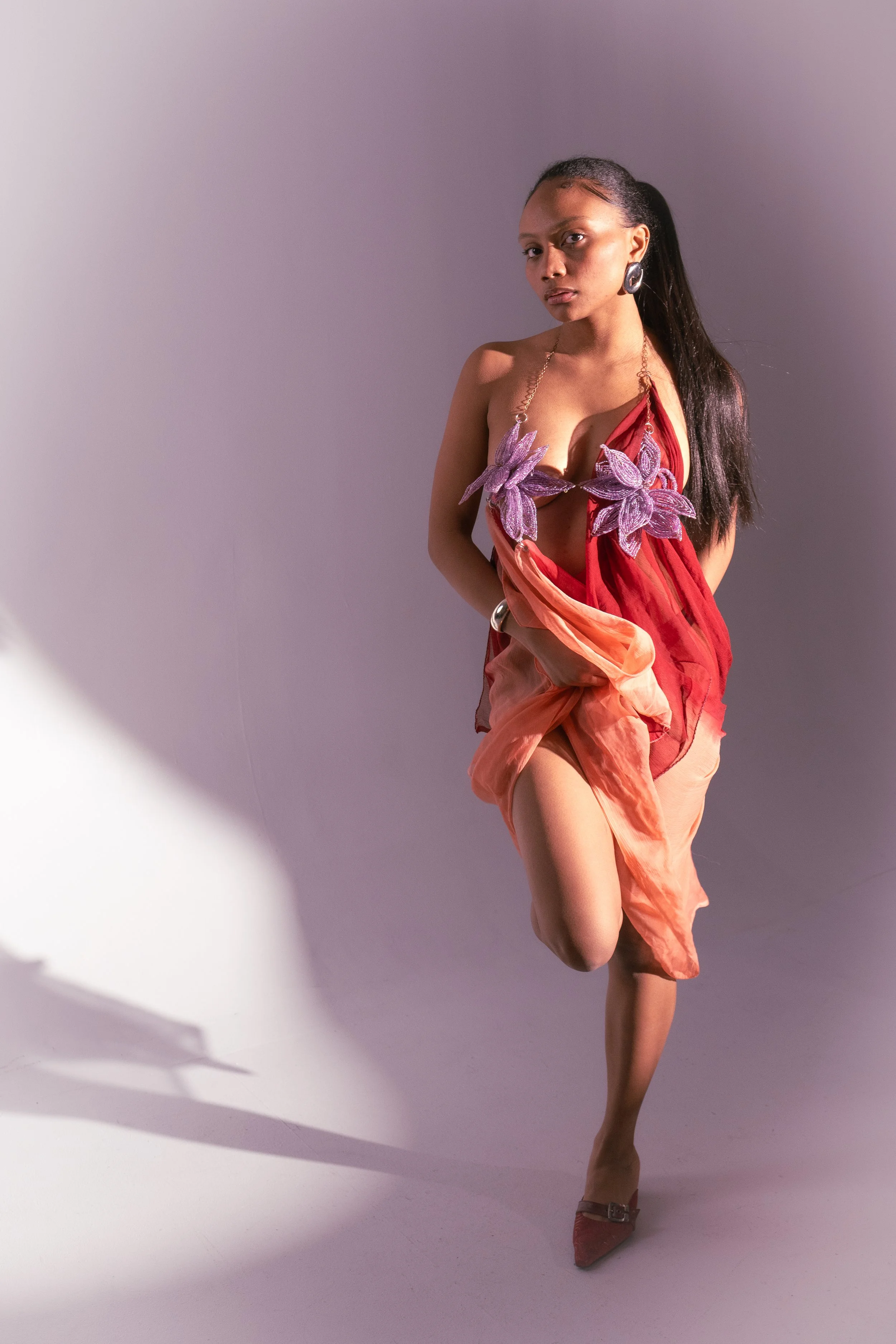
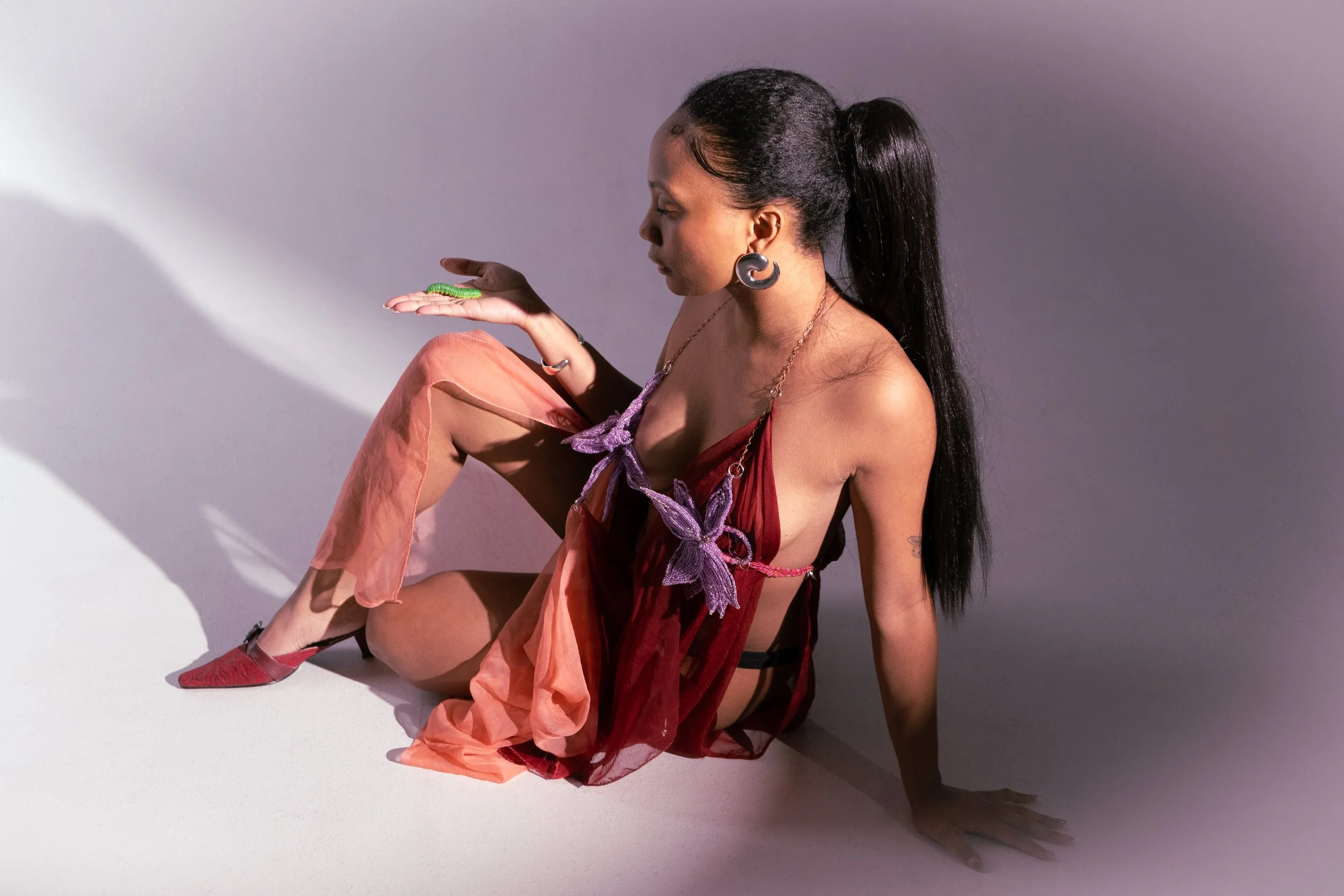
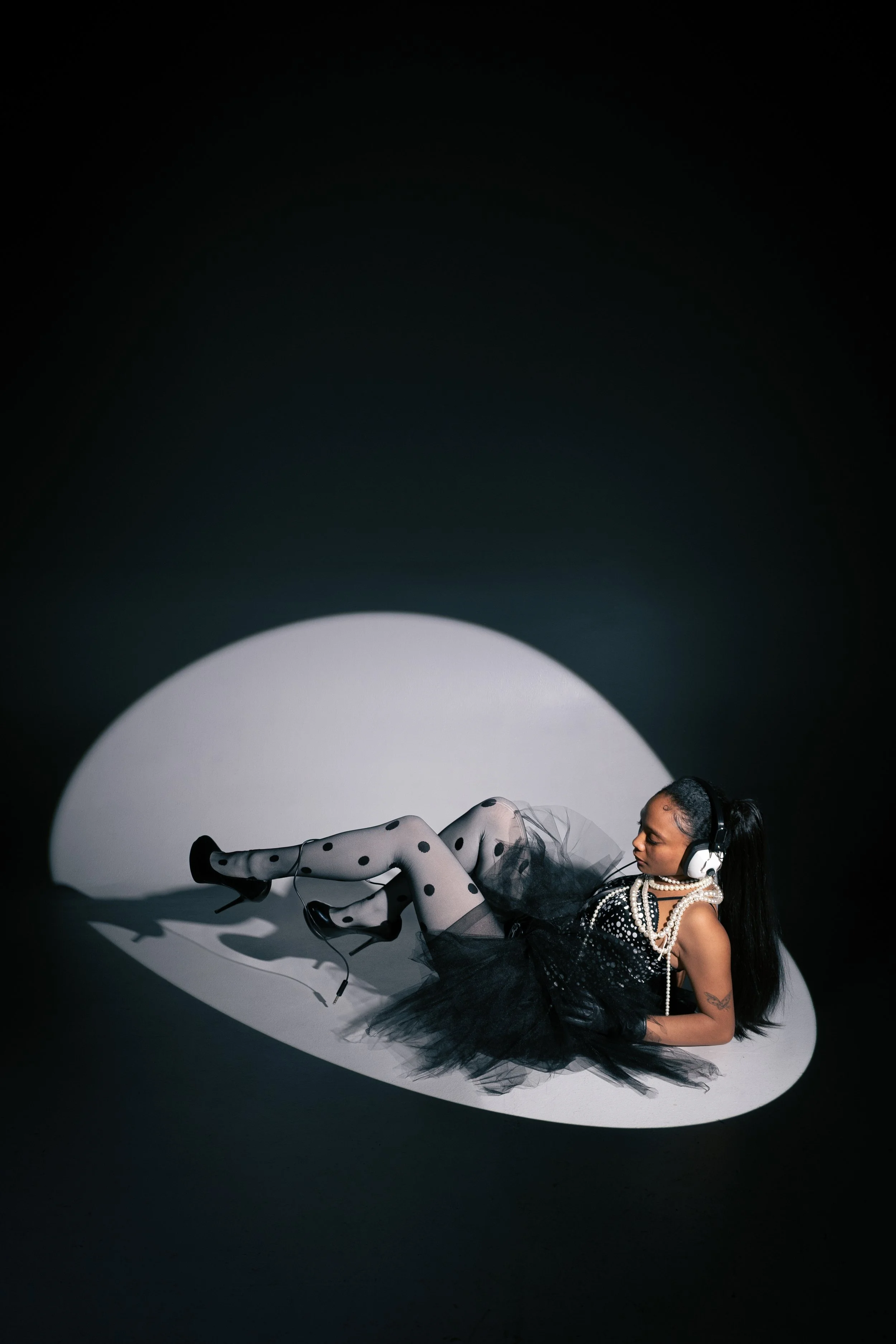
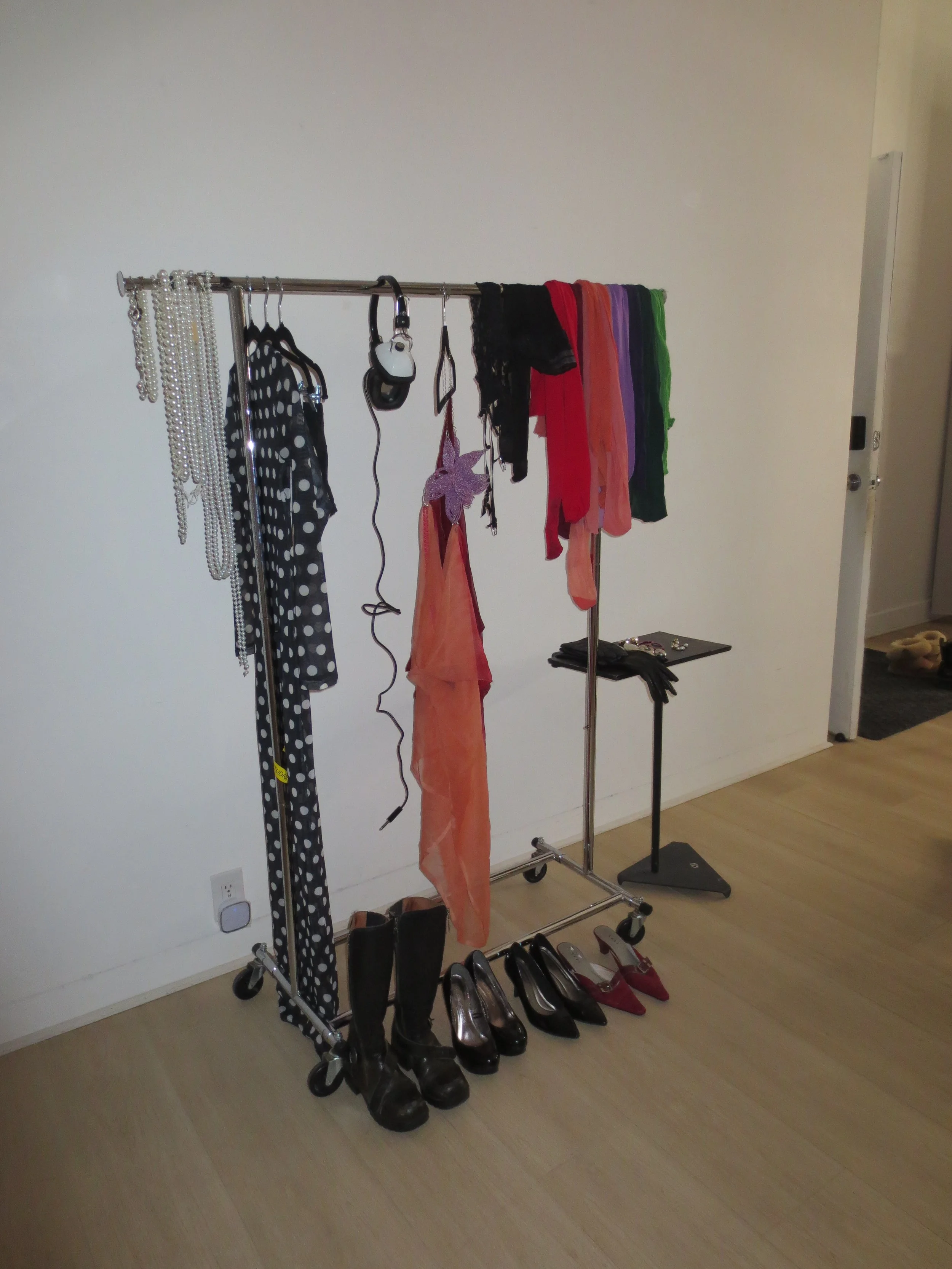
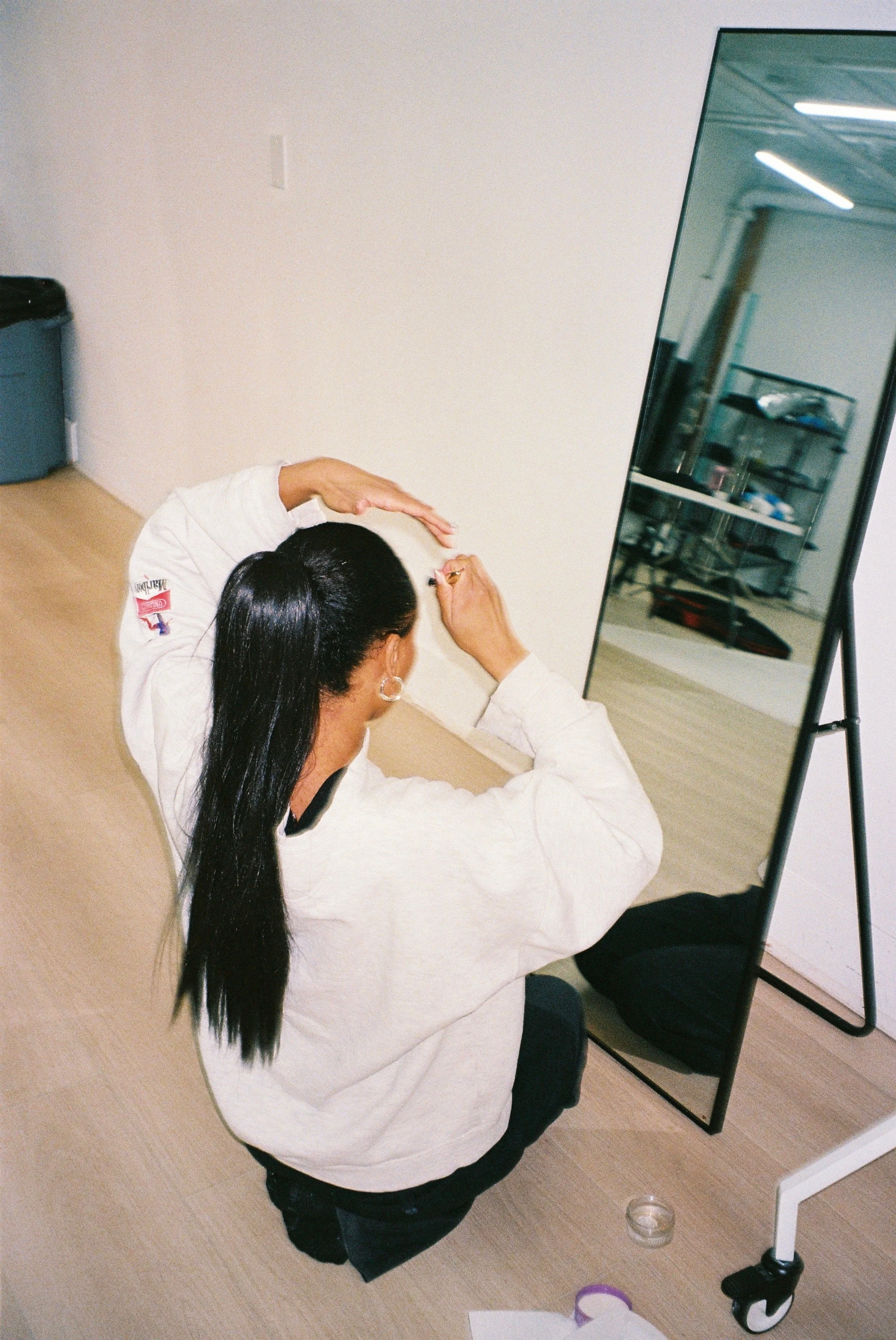
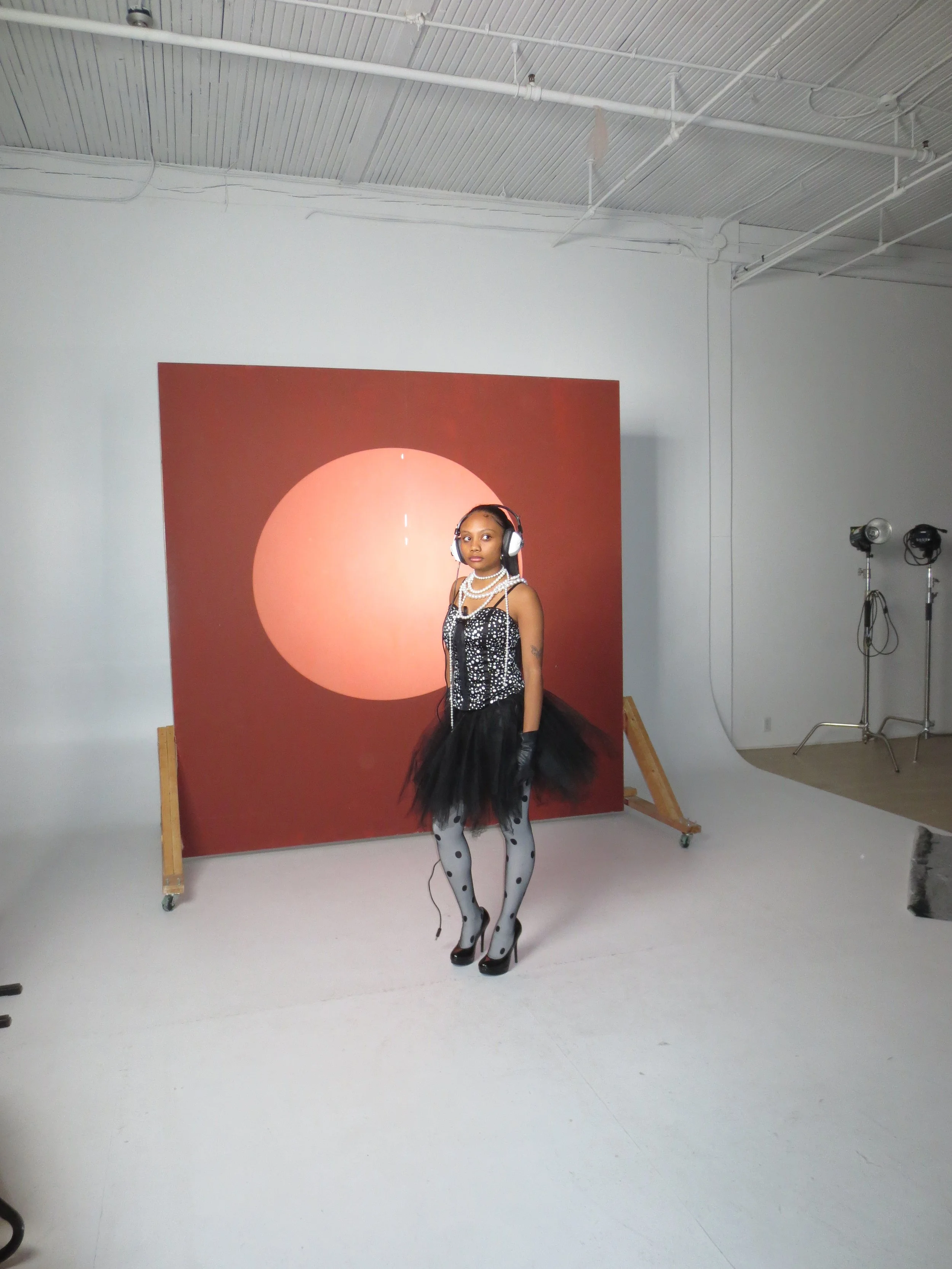
Interview & Photography By Maeve CasalettoDJ Luvbug wears A Poet In Plain ClothesStyled By Sierra HighfieldAssistant Photography By Alex Lucier-HallAssistant Production By Alexis Peddie-Jones & Gabriella RigakosLet’s start by introducing yourself.
My name is DJ Luvbug. I am a DJ and producer, and I also sing under a different alias named Jubilee.
Where did the name Luvbug come from?
My name, Luvbug, came from what my dad would call me all the time. I was always his Luvbug. That was the name on his phone, and when I first started DJing, my name was DJ Layyz, L-A-Y-Y-Z, for Toronto. It was in tribute to my uncle, who taught me how to DJ, and he had the Y-Y-Z as part of his DJ name. But I wanted something more of me, and everyone kind of says I have buggy eyes, so it fits.
What area did you grow up in, and what was your childhood like for you?
From kindergarten to half of grade five, I was in Thornhill. Then I moved to downtown Toronto, midway through grade five. Ever since then, I've lived downtown, but growing up in Thornhill, I feel like I was definitely really singled out. I was one of the only black kids in my school; the only other black kid in my elementary school was in eighth grade. He was on his way out, and so that would have left me to be the only black kid in the school. It was very different, I didn't see anybody like me.
At first, I moved to a French immersion school where I was the only black kid, and then I went to a Catholic school where everyone else was Filipino. But because I mainly look black, no one really believed me for the first half of the time that I was actually Filipino. I'm like, man, these lunches don't just come from anywhere. This is definitely from the Philippines.
How has your background influenced your job and the choices you make in your career? Do you feel like there are any disadvantages that come with that, and if so, how do you deal with them?
Being Jamaican and Filipino, some of the challenges that I face are just because I've grown up in a predominantly Filipino household. In correlation to DJing, I just didn't grow up with a lot of dancehall music and reggae. There's a bit that I seek out on my own or that my parents would play, but I didn't grow up with the type of music that, you know, your grandma would throw on while she was cleaning the house. So I just don't have that same kind of connection to it, but because of DJing and being booked for certain things, I've found another way to have that kind of connection with it. I feel like it's an even better connection, 'cause now it's just purely good vibes and dancing, which is nice.
Being Filipino, honestly, Filipinos listen to so much music, especially R&B, and that's helped me a lot. I feel like it influences the kind of sound that I like to play. I like to play a lot of edits from R&B songs that everyone knows. They've definitely blessed me a lot on that side. And because my parents had me so young, in their early 20s, they also had the time to reflect back and listen to music that their parents listened to, so that just broadened my whole library of knowing music.
Is there any music in particular that your parents or family members put you on that stands out to you?
My parents really put me on SWV, Sisters with Voices. It's this R&B group, and at most parties that I go to, I can hear a glimpse of them. I’ve attended Listening Room, and I think I heard them do a spin-off of it between other tracks. Just hearing the structure of that kind of music with the harmonies, and because they are an R&B group, they're able to do a callback to and sample other rap songs. Even Motown songs as well, have just been a funnel of being able to hear so many different sounds.
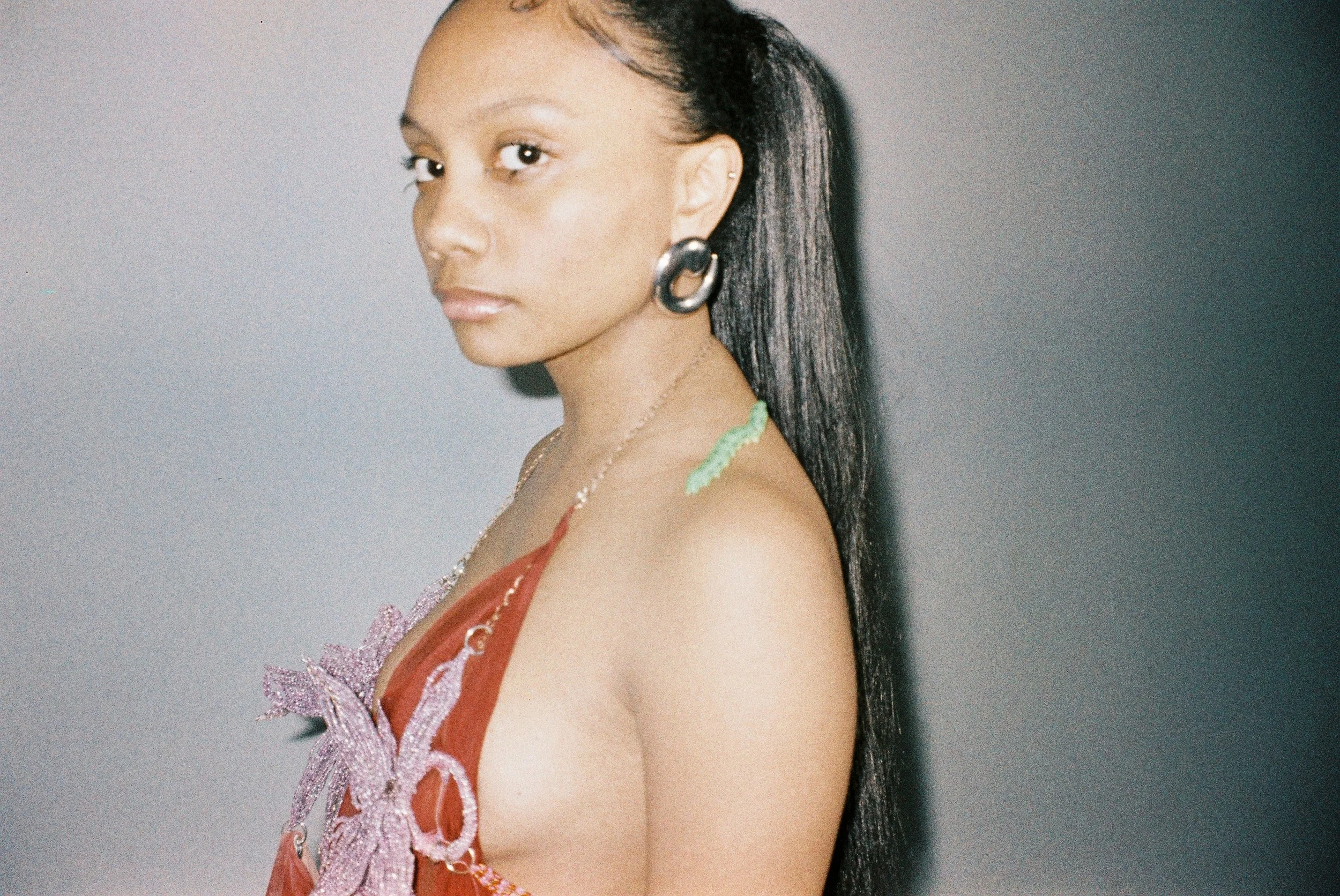
So you talked a little bit about how when you grew up, your parents weren't necessarily playing dance music around you and that you had to kind of go out and find that yourself. How exactly do you go out and find that yourself, when it's not readily available to you naturally?
The way that I was able to immerse myself more within dancehall was through The Remix Project. There are a lot of people who come from a Caribbean background or an African background, where they grew up with these types of songs. Surrounding myself with the right community that knows those tracks and putting myself out there to be in spaces where I'm going to parties like Wi deh’ya where I can just be fully immersed in it. And from there, my Shazam is always on, and I'm writing them down, and then I get to listen to them in the shower or when I'm driving, and that helps. When I incorporate the music into my everyday life, it makes it more personal.
What makes a song something that you want to incorporate into your set? When you hear it, you think, yeah, this is something that I would play.
I usually go on a deep dive through music that I have already saved in previous playlists that I've made when I was younger. Or sometimes I like to go through some of my friends' playlists and see what they have going on through their Spotify.
Are there specific attributes you look for when choosing a song?
When I pick a song to play for a set, it's usually the energy that it evokes when I listen to it. Also, mainly the beat pattern. I'm trying to see how it builds up to the climax point, and if I can already hear another song that I want to mix it in with. Whether it's in the same key, or the beat pattern reminds me of something else. I feel like there are a lot of things going on in my head all the time. I hear it in my brain.
If I can sing another song on top of a track where it is seamlessly in the same key or the same chord progression. I'm like, one, I think this song is already pretty sick. And then two, I know another song that's just as sick, that can blend perfectly with it.
Is there a song in particular right now that you have been enjoying playing?
One song right now that I keep on playing is a footwork edit for the Lil Wayne song 6 Foot 7 Foot on SoundCloud. I use SoundCloud a lot to find other edits that producers have made, and they usually have a link to their Bandcamp, where you can purchase the actual track.
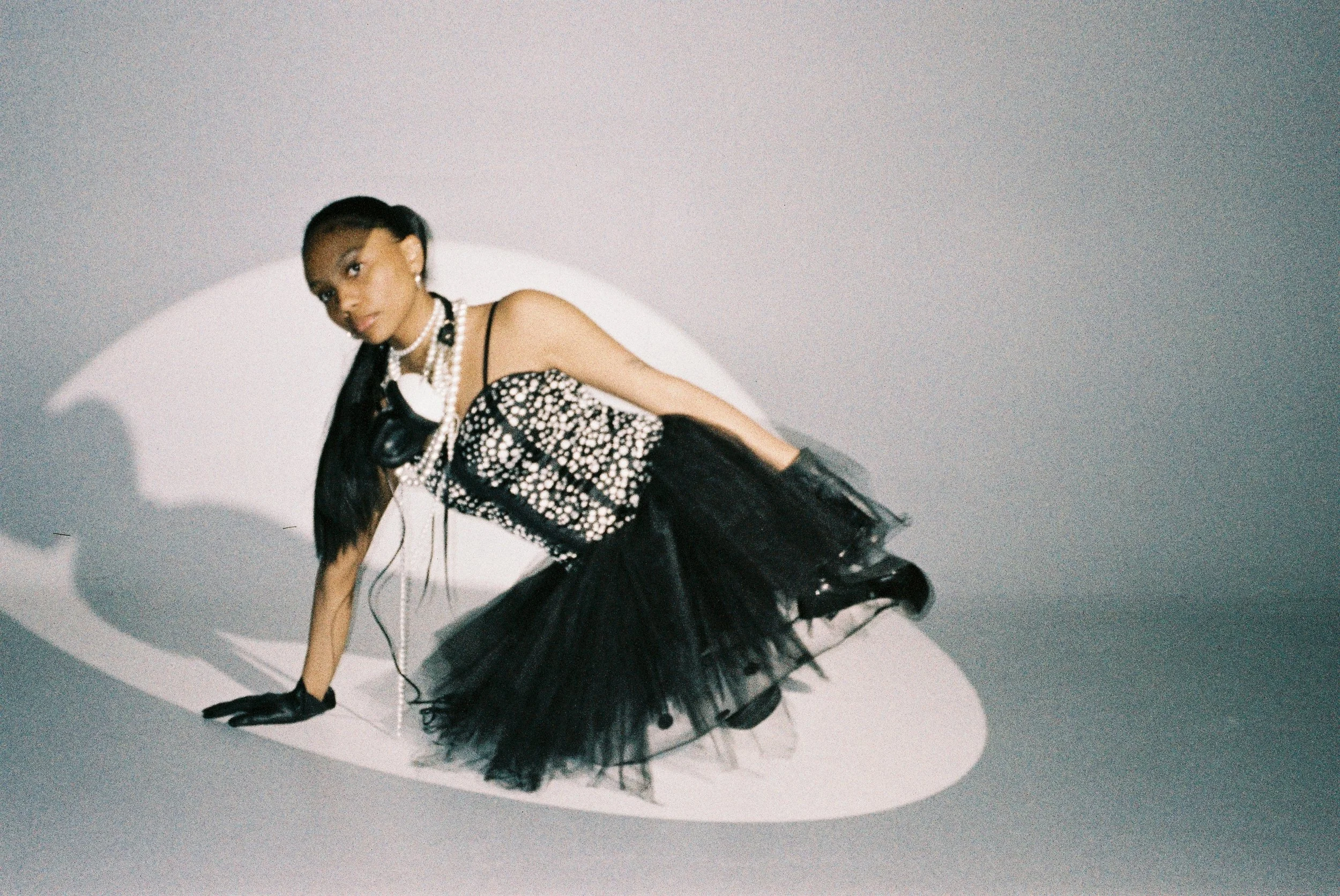
You talked briefly about Remix. Can you explain what Remix is to the audience?
It's a program that I got into in 2024. I was there for round 19, and it's this great space for all artists to come together. They put you through workshops to get you in the groove of doing this as if it were your profession every day. It is to begin with when you go in, but they're giving you all the tools to better yourself and the opportunities to be in the right rooms. All in all, it's you and the rest of the people that you're in it with. There were 60 of us in total. You become the best of friends and get to learn more and express your ideas within the arts without feeling too bad about what you're doing.
Before that, I felt like I wasn't really doing much with my life 'cause it's art and it's hard to measure how much you're actually doing in comparison to someone else who's going to school for computer science or for law, where you have papers to show that you've done something. In a creative field, it's just so much harder to forgive yourself and tell yourself that you're doing something every day. Being around others who are doing the same thing for the same kind of goal, which is to make it in doing something that you love, has been really nice to have that kind of support, so that you're not wasting time, you're doing as much as you can every day.
Do you have any advice for other people who are trying to get into DJing, specifically young women, especially in Toronto? What would you tell them if they're getting started?
For people who are getting into DJing, I'd say I think you should do it. Showing people a curation of your own playlist should be shared at all times, and showing and sharing music that you haven't heard before should always be shared. If you want to start, you can rent a controller for really cheap and use a free trial online with Serado to get yourself started.
If you have the drive and itch to do it every single day, I'd say make it your profession. If you just want to do it for clout or for a party, do your own house parties. I'm not telling you not to do it, but if you just want the art of bringing people together and having a great time, I think you should definitely start. And it's not impossible; there are also free apps and everything. Just get your foot in the door, make friends with other DJs, go to other people's shows, support them, get to know them. And if you're in the right circle and they have an open deck, show off your skills, and that's how you kind of get your foot in the door.
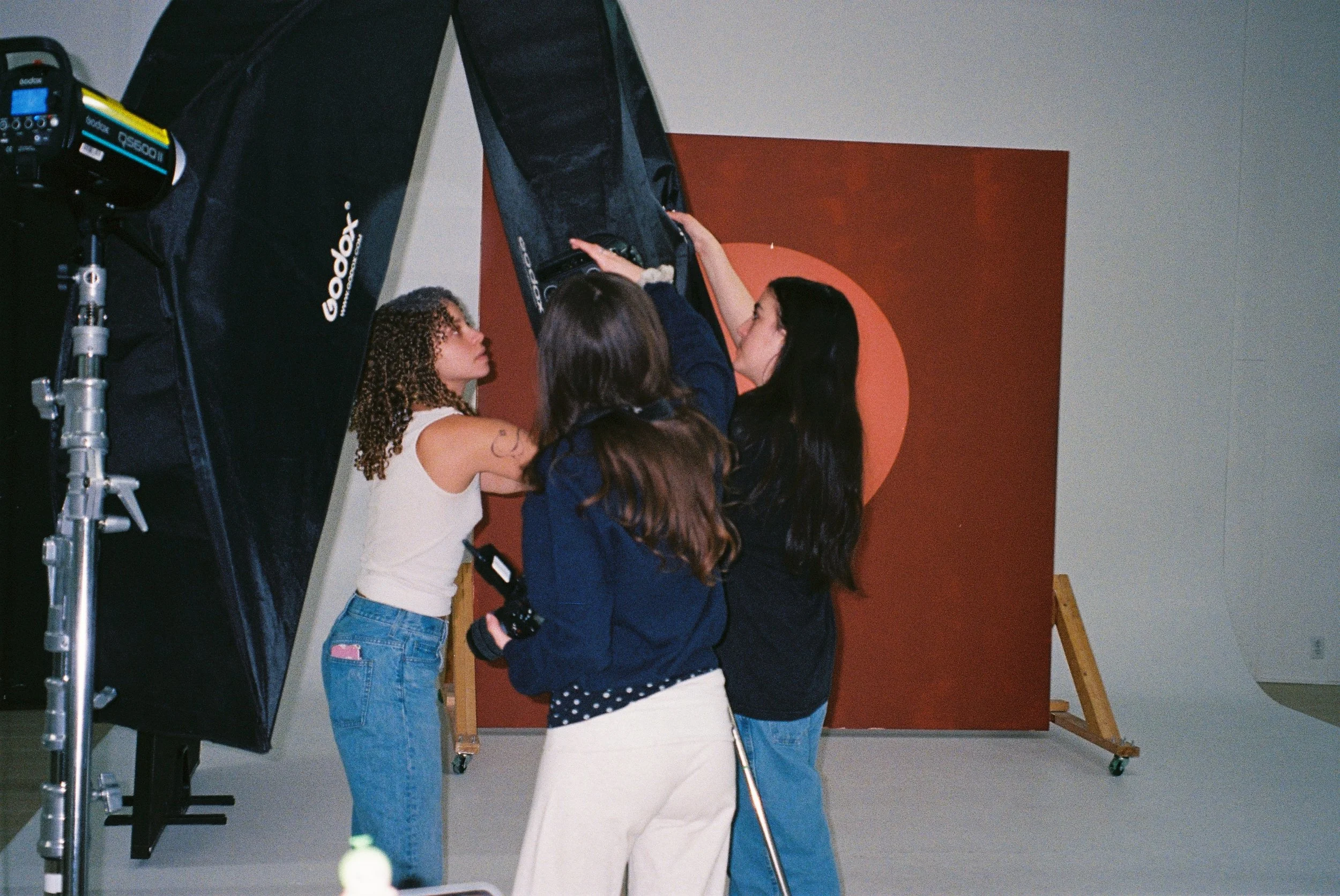
Do you remember the first gig that you played and what that was like?
My first proper gig, which I've probably ever done, was for my high school fashion show. I DJed for, I want to say, five hours, and I got paid $50. I didn't really know too much, and, honestly, it's my first gig. Thank God I got paid something. I was in grade 10, and it was really chill. There was a runway. I felt really nervous because I was doing it in front of everyone else, and I didn't want people looking at me, but because there was a whole show going on, that took off the pressure.
Since you’ve been doing this since you were in high school, was it difficult trying to break into the scene with barriers against you? I imagine you couldn’t get into every venue.
In high school, I definitely had a different vision of what DJing was to me, 'cause I thought it was something that was fun that I could do, and I could mix. I'd obviously never been into a club before, so I didn't know what kind of environment that would bring. I was definitely just doing it for vibes and for fun and for my friends in high school, and I thought that was cool.
What was the moment where it switched for you, where you were like, oh, this could be like a career for me. This could be my thing?
I think it definitely changed during COVID; everyone was doing more of an entrepreneurial kind of job when everyone lost everything. You had to think of ways to support yourself on your own without having to go and look for direction from a boss. I had to become my own manager, my own boss, and I just went up to my parents, and I was like I think I'm going to pick this up again.
I stopped for a little bit just because I was a kid and was like, I feel kind of bored with this. I don't know where else this can take me. Then I saw videos of what the club actually looked like, and I went to the club, and I'm like, I'm gonna take this more seriously. I wanted to be the one curating the music. I find myself now sometimes going to clubs, realizing that I have more fun curating the vibe than actually being a part of the crowd. I feel like I can hide behind the music just a little bit, which is nice.
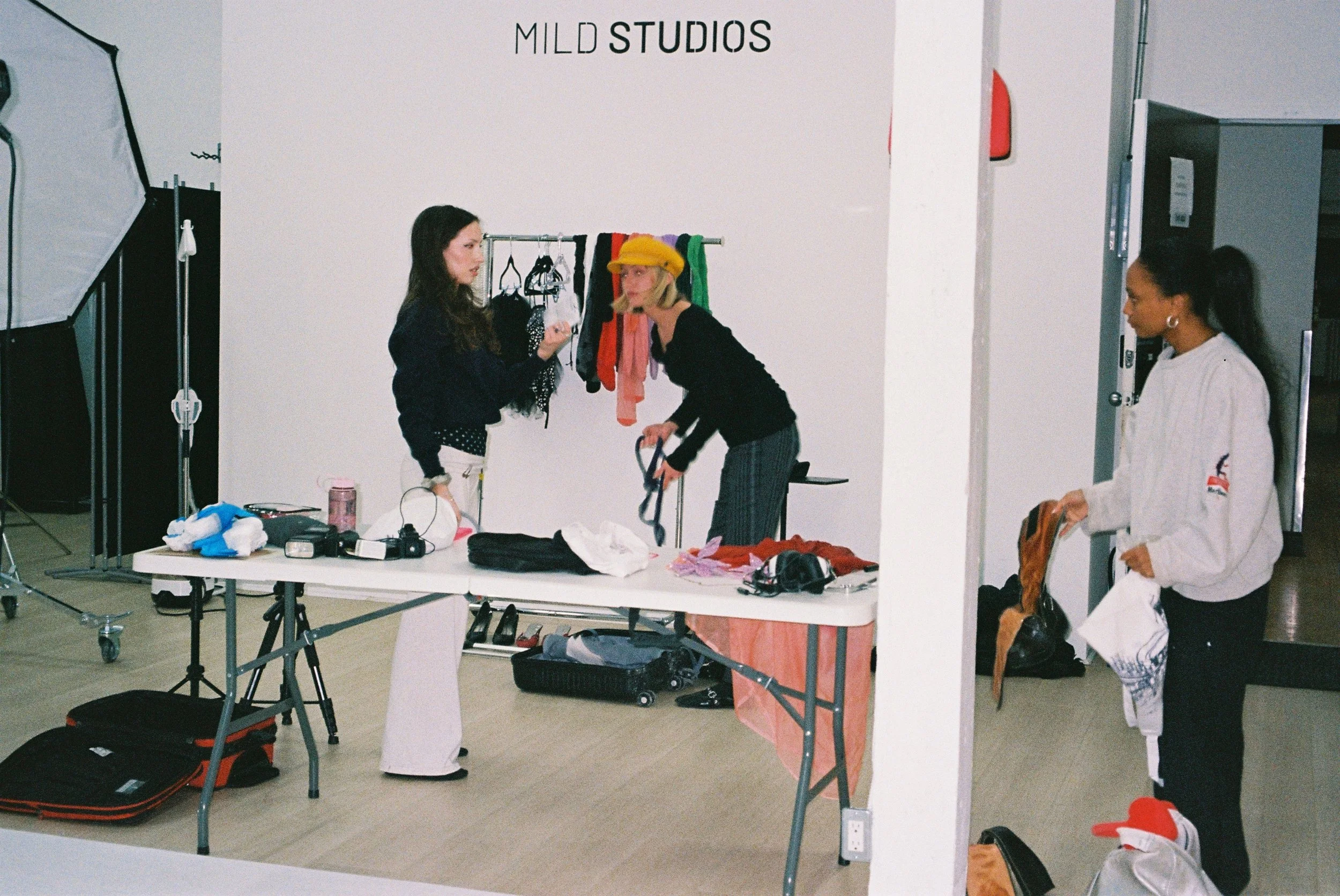
It's like you're the centre of attention, but you're not.
Yeah, being a DJ is a great way to be an anti-social artist. I know so many awkward DJs.
Why do you think that is?
You know, when you see that quiet person in the corner of the room, and then they show you this insane playlist that they have, I feel like those are the people who should be DJs and who are DJs. They just let the music speak for itself. You can just show so much emotion with every song.
Do you have a favourite place to go dancing?
I'd say Standard Time always has such a great space, and the sound system is really nice. Sounds good is really great as well, but sadly, it's gone now.
Is there a favourite place you like to play?
Honestly, any type of DIY space. The harder it seems to get to a space and the people who actually do make it out there, I think, is what makes it. I would also say, It's OK Studios, I like their sound system and the equipment that they have there.
Do you have any favourite DJs or artists from Ontario that you like to listen to?
I really enjoy listening to Nino Brown and Young Teesh. They're an amazing duo. They're from somewhere in Ontario; I'm not sure where. I've seen them here. But I've also seen them play every time I've gone on vacation, in New York and in California.
Do you have any thoughts on the Toronto music/club scene, and what would you improve or like to see moving forward?
The club scene in Toronto varies depending on what it is. I'm not gonna list any venues because I might get booked there, but if the shoe fits, babes, the shoe shouldn't fit, okay? Make some changes. If you're at a club that has a booth and bottle service, you have to stop letting the men be center stage. The reason why men complain that they don't see women wearing heels in the club anymore is that they're taking up their seat space by standing on it, with their henny bottle on the couch. We don't need to see that anymore. The women need to sit if you want to see them in heels. There's a reason why they make ladies free.
I also think if you are in a venue space that doesn't have ventilation, and you don't have water, and they give you an empty cup and make you go to the bathroom to fill it up, then everyone's having a dookie time. The thing about that, too, is that there’s no ventilation, so it's not helping anyone; it's unsanitary. I think in any establishment, you should be able to get free drinking water without having to travel for it.
That's definitely something we should be improving. Making it more accessible for people to call other people out if something weird is going on. Mostly in rave culture, there are people who are out there to support you, but I feel like it’s not too common in other venue spaces. DROM Taberna is an amazing place to get help. If there's a weirdo there, they'll kick them out, so I recommend that place for a good time.
Do you feel like Toronto will always be your home base?
Yes, I think Toronto will always be a home to me, especially if I branch out and start playing in other places; there will always be venue spaces here that I would want to come back and reminisce about.
You have two younger brothers. Do you feel as though the city is the same for them as when you were their age? How has it changed? And what would you change to make a better future for them?
This may be a hot take, but I don't think we should be giving participation ribbons everywhere. People need to learn the hard way that life is not gonna always go the way that it's supposed to, and expect that you're still gonna get something. There are consequences to certain things, and if you're playing a soccer game, it's okay to lose. This is what you need for a drive to improve and see what you did wrong. I just feel so bad; you need to learn; we’ve got to learn to let people lose.
Also, our transit system is terrible. During my day and for their day, but I hope that the transit is gonna be a whole lot better here. I think we need better city planning here, and just maneuvering around the city. I know the city wasn't built for the capacity of people that are coming in and out, but because we are and we're becoming a popular city each year, especially with all the new artists coming out, it brings in more tourism. I think we just need to have better roads to fit the cars that we have coming through, and a better transit system. I have hope for them, though. I think things will get better. I just hope the brain rot doesn't take over the generation. That's all I hope for.
Toronto is often criticized for its culture surrounding the arts. Outside of Remix, how have you experienced the DJ culture in the city?
I'd say for the most part, everyone's pretty nice, and they're very great at collaborating. There are so many DJs that I've met online just by DMing them and being like, that mix that you posted in that short clip is really great. They've been really welcoming to have me be a part of their scene and just see what they're up to.
Do you find that people can be pretentious or gatekeepy?
I definitely feel that with a couple of DJs. A lot of people just have an ego when it comes to DJing, which kind of sucks. And it already puts us in a bad light; people make memes about us. They're like, "don't date a DJ” or "DJ starter pack”.
Do you feel that the profession can be trivialized as DJ equipment becomes more accessible? What separates a serious DJ from someone who just picks it up?
Truthfully, become a DJ if you want to, try your best, but if you're not really taking it seriously, life will weed you out anyway. It just makes me want to work a bit harder, and if you can't move a room for four plus hours from knowing how to break it up from an opening set to the end of the set, it's really an art form. This is something I'm still learning and working on, but if you're DJing a club, you have to make sure the bar gets its sales. You have to have an opening set while people like trickle in, a mid set to get people singing and dancing, and you have to play songs that people like but that they can also take a break to and be like, okay, I can go to the bar and get a drink now.
It's literally like you're controlling the crowd; it's a whole flow. Everyone just thinks, I want to play a banger set, this song, this song, this song. But you're gonna tire the audience out. You're gonna have a high BPM, but you need to slow it down so people can catch their breath and not be burnt out before the next DJ. There's a whole etiquette towards it. At least if you're playing a club set, like at Apartment 200 or Libertine, you don't want to be playing a peak-time set if you’re the opening set, because then that just takes away a bunch of songs for the person who's playing at the peak time. There aren't enough people in the crowd for you to be playing all the banger songs. It doesn't make sense.
Who are your inspirations or favourites in the city?
It depends on what I want to be hearing, but there's this DJ named Adj. Their name is literally spelled like A-D-J, but that's their first name, so it’s funny that they're a DJ as well. So I'd say them, and then I'd say Nino and Teesh. I feel like I've seen all three of them the most.
What would you like your final message to be?
Pay your DJs. Don't always be asking for the guest list all the time. Not everyone can always bless you guest list. If you really want to support people and you can pay for the ticket, please pay for the ticket. These are people's jobs; they want to give you a good time. We would love to give a free show every time, but it's really hard to do. We still have to sustain ourselves, and as much as this is a party for everyone else, this is a party for us plus work. So I'd say that, pay people on time. And if something gets cancelled, try and pay back the people that are coming out to your sets, if you want them back, you know? Otherwise, they're not gonna come back; they're gonna want a free ticket back.
See the full interview & more here:
What's inside?
168 pages of content featuring photography, editorials, interviews, and written pieces
Contributions from 15+ photographers, writers, and artists who have been shaped by Ontario and are shaping Ontario
Including but not limited to...
The Ontario Place Problem by Ewan Casaletto
Toronto is Ravenous by MJ Hill
A tribute to Sudbury by Kendra Jackson
Interview with Toronto-based DJ Luvbug
Photography works by Maeve Casaletto & Jordan Mills
Games, comics, & so much more